
What Happened at the EX Factor Summit
A full recap of the inaugural internal communications workshop at Transform
The EX Factor Summit wasn't built for people who want to sit and listen. It was built for people who want to do the work.
On March 23, ICology hosted its inaugural EX Factor Summit as a preconference event at Transform in Las Vegas. The format was deliberate: no keynote stages, no case study decks, no "here's what we did at my last company" victory laps. Just a full day of hands-on workshops, expert-led sessions, and peer collaboration, designed for internal communications practitioners who came ready to move something forward.
Here's what happened.
The premise: Come with a problem. Leave with a blueprint.
The day opened with a simple but unusual ask. Every attendee was expected to arrive with a real challenge — something they're actively working on, stuck on, or trying to figure out. Not a hypothetical. A real one.
That's what made the EX Factor Summit different from most employee experience and internal communications conferences. The goal wasn't inspiration. It was traction.
The framework anchoring the day: the EX Mad Libs. A structured problem statement designed to help IC practitioners articulate what they're trying to solve in terms that actually land with business leaders.
The formula:
How do I [verb] [audience] [specific behavior] so that [measurable impact], achieving [outcome] by [timeframe], despite [constraint/tradeoff]?
Two examples from the deck:
"How do I reach warehouse workers with time-sensitive operational updates so that message recall improves by 25%, achieving fewer 'I didn't know about that' moments by next quarter, despite screens that have been showing the same holiday party photo since December?"
"How do I equip frontline managers to cascade leadership messages consistently so that employee comprehension scores improve, achieving aligned understanding across shifts by end of Q2, despite managers who don't see comms as their job?"
The constraint/tradeoff slot turned out to generate the most honest conversation of the day. When you have to name the real obstacle, it stops being abstract.
The four levers: Morning expert sessions
The morning brought four practitioners to the room to tackle the levers that shape employee experience: culture, leadership, change, and measurement. Each one was a focused, practical session — no fluff, no filler.
Lever 1: Culture
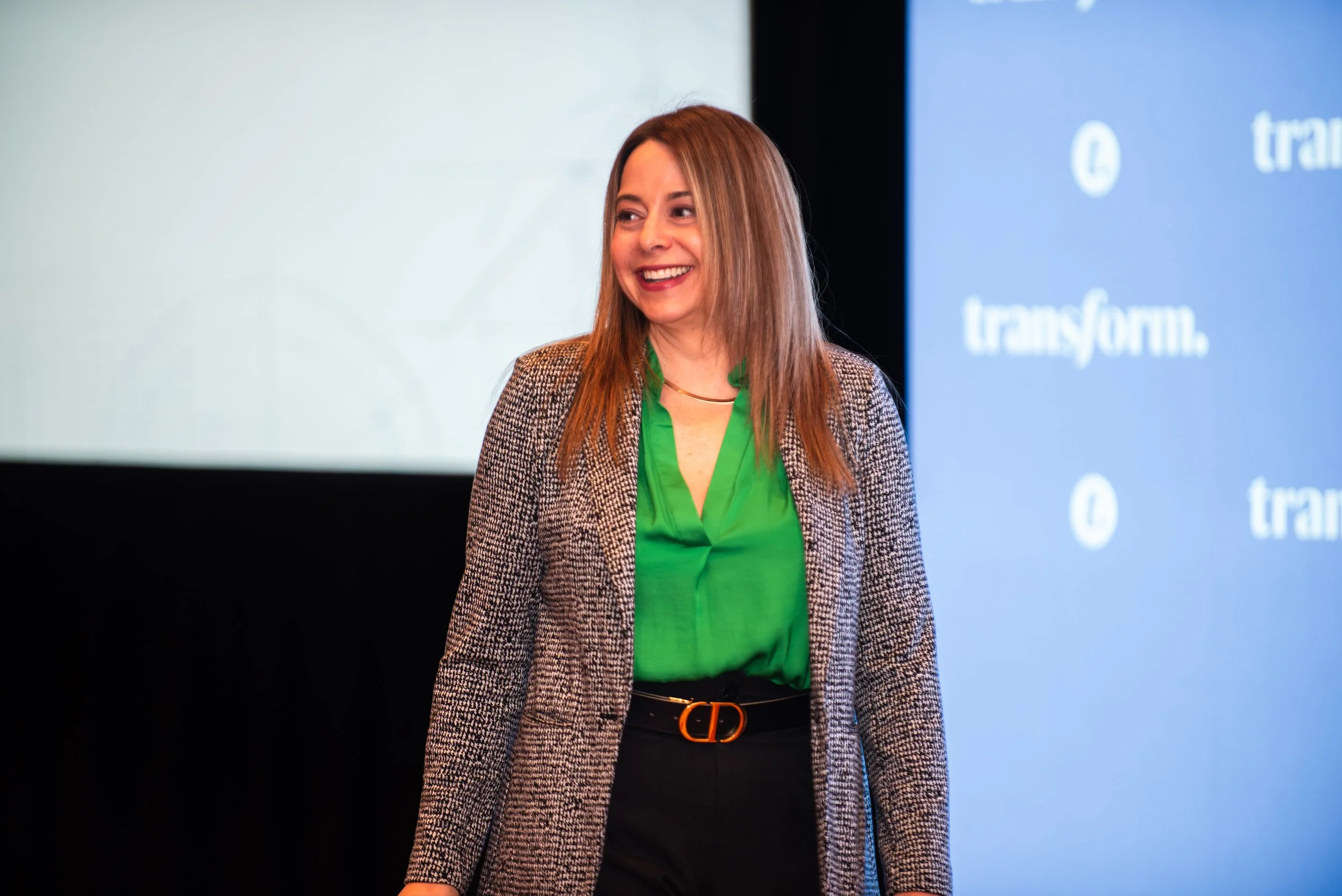
Ann Melinger, CEO, bink.
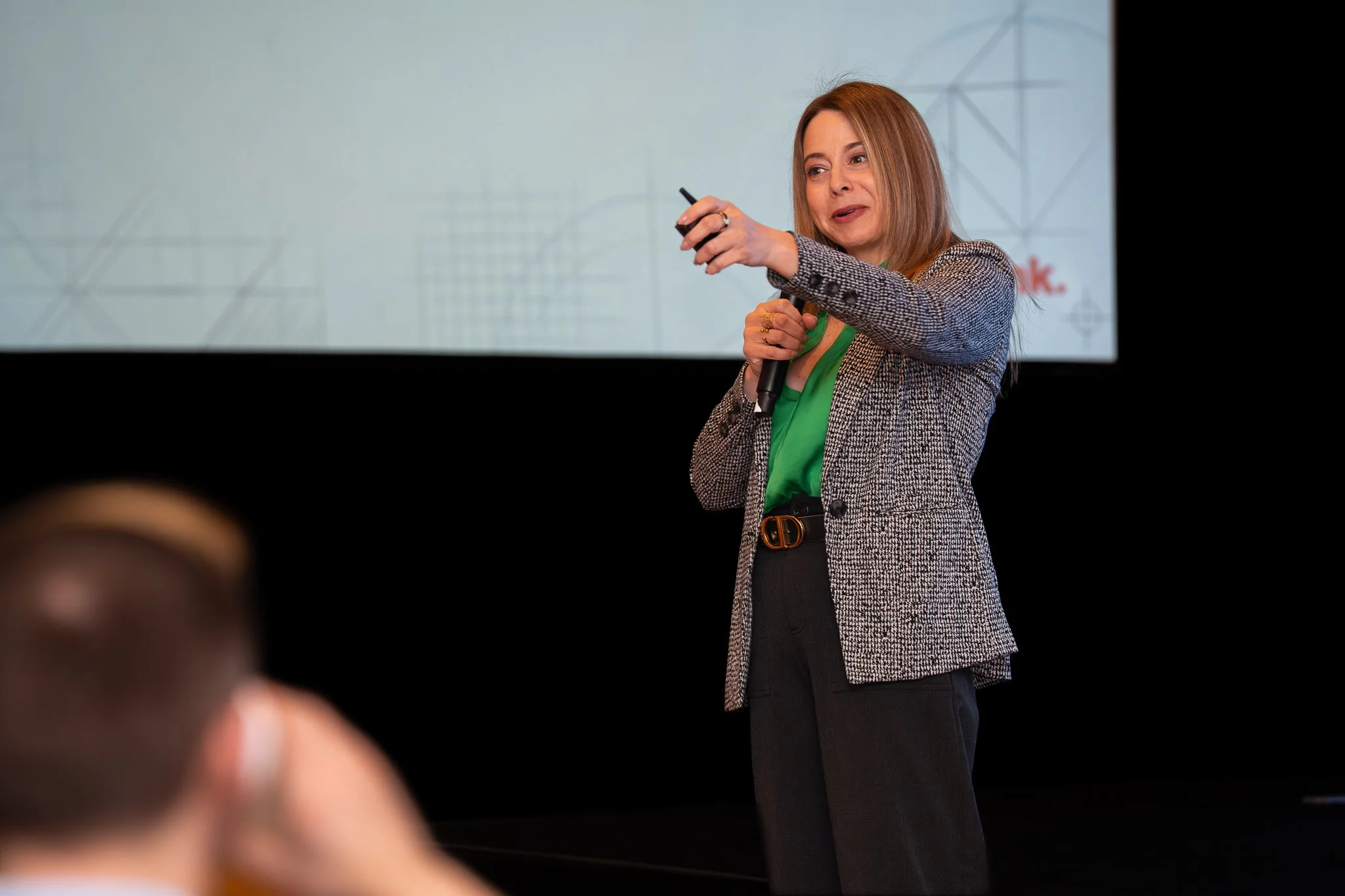
Ann came in with a clear definition of what culture actually is, which is more useful than it sounds because a lot of organizations treat culture like a vibe rather than a system.
Her definition: culture is a combination of values, behaviors, beliefs, and experiences. Not a ping-pong table. Not a mission statement on the wall.
The data she brought was hard to argue with:
72% of workers say culture helps successful change initiatives happen (PwC, 2021 Global Culture Survey)
Workers in positive organizational cultures are nearly four times more likely to stay with their employer (SHRM State of Global Workplace Culture, 2024)
Healthy organizations deliver three times the total shareholder returns of unhealthy ones (McKinsey Organizational Health Index)
For IC practitioners in the room, the most actionable part was Ann's five pillars for lasting culture change:
Listen — understand what's real today before trying to change anything
Align — culture can't scale without leadership alignment
Define — uncover and articulate the foundational elements (and watch for common pitfalls: too many values, generic language, skipping behaviors)
Embed — use strategic communication to build clarity, connection, and consistency
Sustain — build systems and structures that keep culture thriving
The line that landed hardest: "Culture isn't what you say it is. It's what your people experience."
And the practical framing for IC's role: every message is a signal of what matters. Managers aren't just communicators — they're culture builders. Position them that way, give them the tools, and close the feedback loops.
Lever 2: Leadership
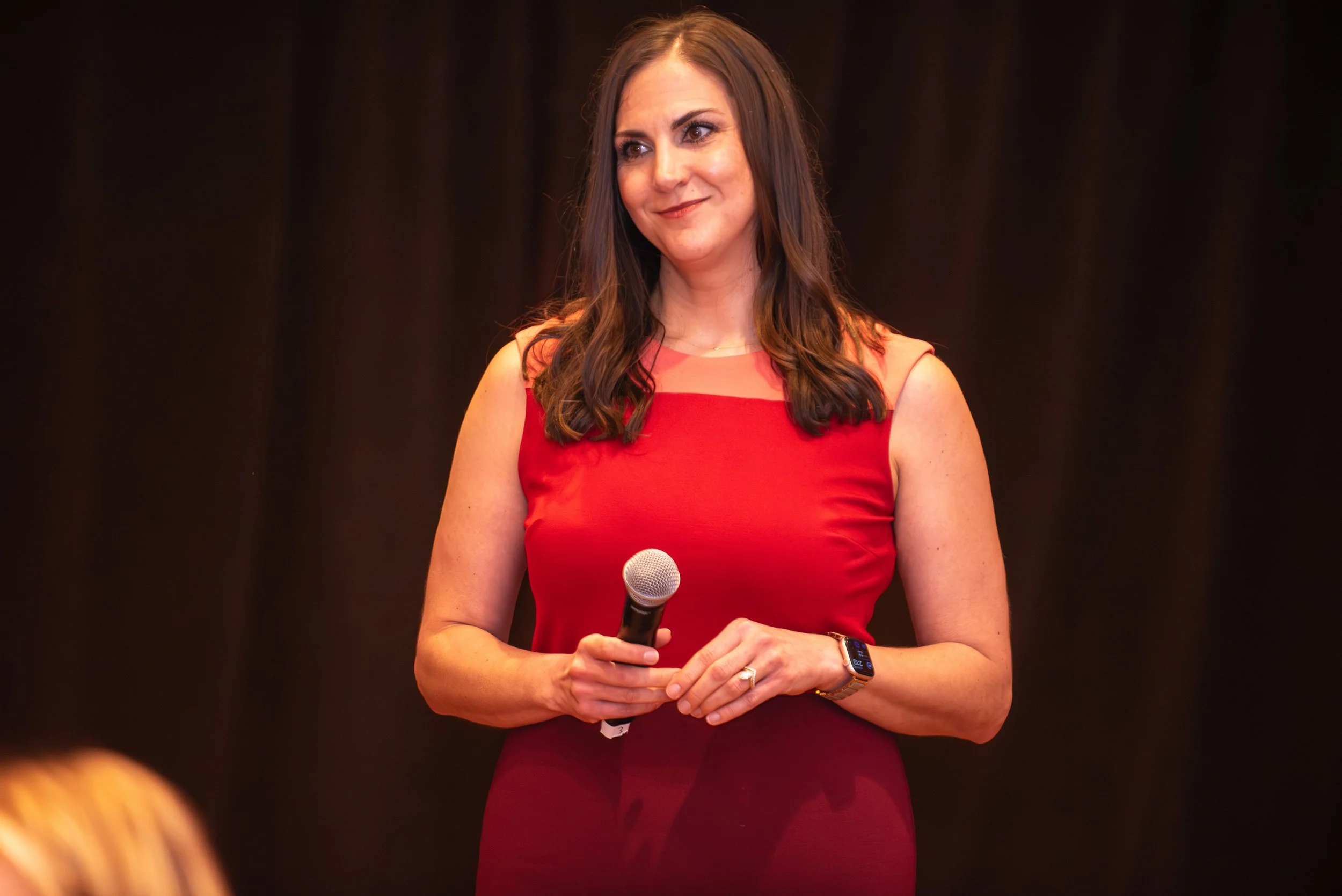
Lindsay Turner, Founder & CEO, Frank Advisors
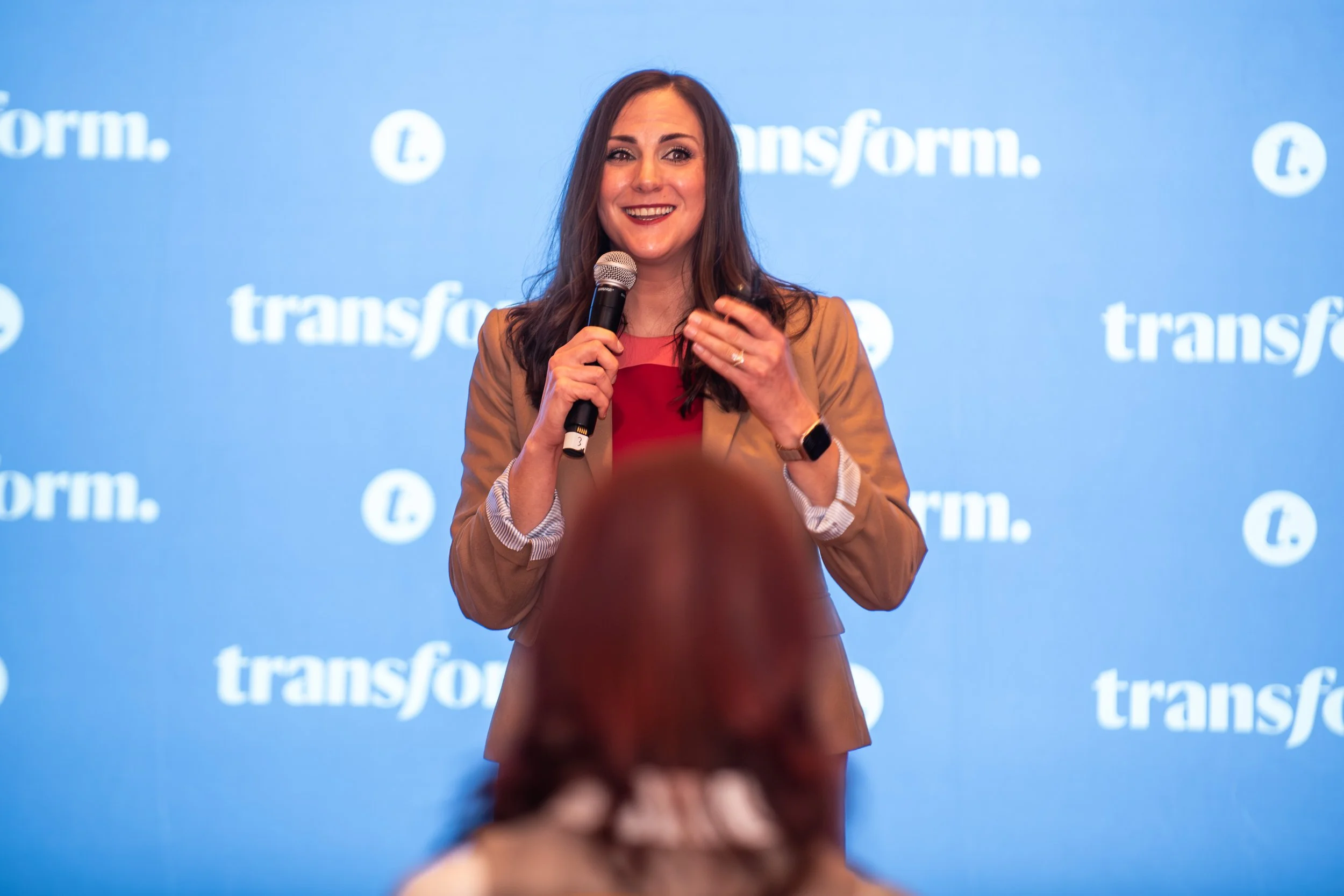
Lindsay opened with a Brené Brown definition that reframes what leadership actually means: a leader is anyone who takes responsibility for finding the potential in people and processes and has the courage to develop that potential.
That's a useful frame for IC practitioners who often wonder why they can't get executives to communicate more authentically. The problem frequently isn't willingness — it's that leaders don't know what employees are experiencing, and nobody's told them.
Lindsay's core provocation for the room: you know more about the employee experience than your executive team does.
That's not a complaint. It's an opportunity. If communicators can close that gap — translating what's real on the ground into something leaders can act on — they become indispensable advisors, not just message-senders.
The question she suggested IC practitioners bring into leadership conversations: "What's one thing I may not know that you want me to know or be aware of?"
It shifts the dynamic. And it gives leaders room to be honest.
Lever 3: Change
Pinaki Kathiari, CEO of Local Wisdom and Co-Founder of Resource Hero
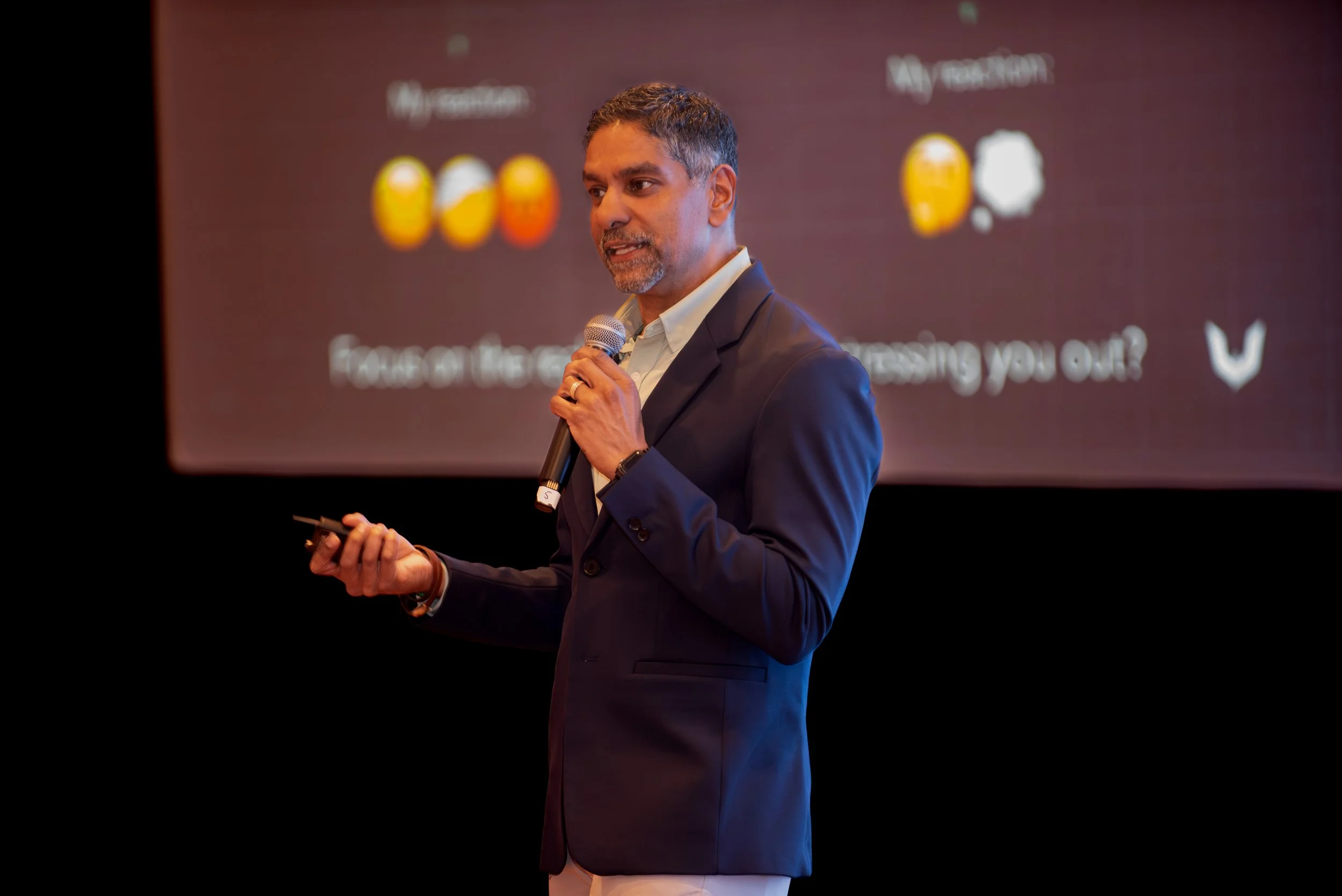
Pinaki's session was the most emotionally direct of the morning. His five facets on change weren't about process — they were about people, and specifically about why change feels so hard even when it's necessary.
Five Facets on Change:
Change triggers something deeper than the change itself. The reaction you're seeing from employees isn't really about the new org structure or the platform migration. It's about what that change surfaces underneath — identity, security, belonging. Communicators who understand this stop being confused by disproportionate responses.
The worst part feels like forever. It doesn't last forever. But at the moment of maximum pain, it feels like it will. The goal isn't to minimize that — it's to acknowledge it, and to show people what's just beyond it.
We're all at a different place on the hump. Senior leaders found out six months ago. HR and comms found out three months ago. Employees find out at the town hall. When leadership is already moving on, employees are still processing. Build your communication cadence around where people actually are, not where leadership wants them to be.
Change spreads through people. Not through emails. Not through town halls. Through the informal networks, the conversations in the break room, the managers who either amplify or undermine the message. Identify those people and work with them.
Change needs a story arc. Pinaki referenced Nancy Duarte's "Venture Scape" framework and the story structure of Disney's Inside Out 2 — both showing that people need to understand where they've been, where they are, and where they're going. Dream, leap, fight, climb, arrive. Give change a shape.
One research finding from the session that's worth bookmarking: how you frame change significantly affects adoption. Framing change as social change (this will help us move forward and change how we do things) increases support. Framing it as status quo (this will help us get through this and return to normal) doesn't. The words matter.
Lever 4: Measurement
Jason Anthoine, Senior Vice President and Managing Director, Arketi Inside

Jason went directly at the measurement problem IC has been circling for years, and he didn't soften it.
The issue: we can only measure what is generally understood and defined. And what IC professionals do at work isn't generally understood, much less defined.
So we measure the wrong things. We count outputs — opens, clicks, sends, downloads — and present those to leaders who don't care about any of them.
His reframe: outcomes over outputs. And more specifically, understanding what leaders actually care about.
It's three things:
Revenues
Costs
Risks
That's the list. If you can't draw a line from your communication work to one of those three, you're going to keep fighting for resources and losing.
Jason's practical suggestion: use their dashboards. Don't build a separate comms measurement system and try to convince leaders it matters. Find the business metrics they're already tracking and show how your work moves them.
One sharp line on AI and measurement: "AI-assisted measurement is great. As long as that AI is Actual Intelligence, not just artificial."
The point: technology doesn't solve the conceptual problem. You still have to know what you're measuring and why.
The afternoon: workshops that did the work
The afternoon was where the EX Mad Libs framework became real.
Define It: Attendees took their problem statements through a structured exercise to sharpen what they were actually trying to solve. This is harder than it sounds. Most problem statements start too broad, skip the measurable impact, or leave the constraint vague. Naming the "despite" — the real obstacle — is where the useful conversation starts.
Peer Exchange and Sharing: Participants shared their draft problem statements with peers. The point wasn't validation — it was friction. Hearing your problem described out loud to someone outside your organization surfaces assumptions you didn't know you were making.
Design It: With a sharper problem statement in hand, attendees worked through what an actual approach would look like. Not a finished plan — a working draft. Something to carry back to the office and build on.
Peer Review: Another round of sharing, this time with more substance to pressure-test. Peers pushed on logic, questioned assumptions, and offered angles the presenter hadn't considered.
Commit and Share: The closing exercise asked each participant to name one specific thing they were committing to doing next. Not aspirationally — concretely. By when, with what, for whom.
What made the EX Factor Summit different
Thank you Bree Bartos from Local Wisdom for Joshua Arantes’ testimonial at the EX Factor Summit.
Most internal communications conferences follow the same format: speaker presents what worked at their organization, audience takes notes, attendees leave with a list of ideas they may or may not ever use.
The EX Factor Summit ran the opposite direction. Attendees did the work during the event. They left with a problem statement that was sharper than the one they arrived with, a draft approach, and peer input from people who work in the same discipline and face similar constraints.
The design principle behind it: inspiration doesn't survive the return trip to the office. Frameworks do.
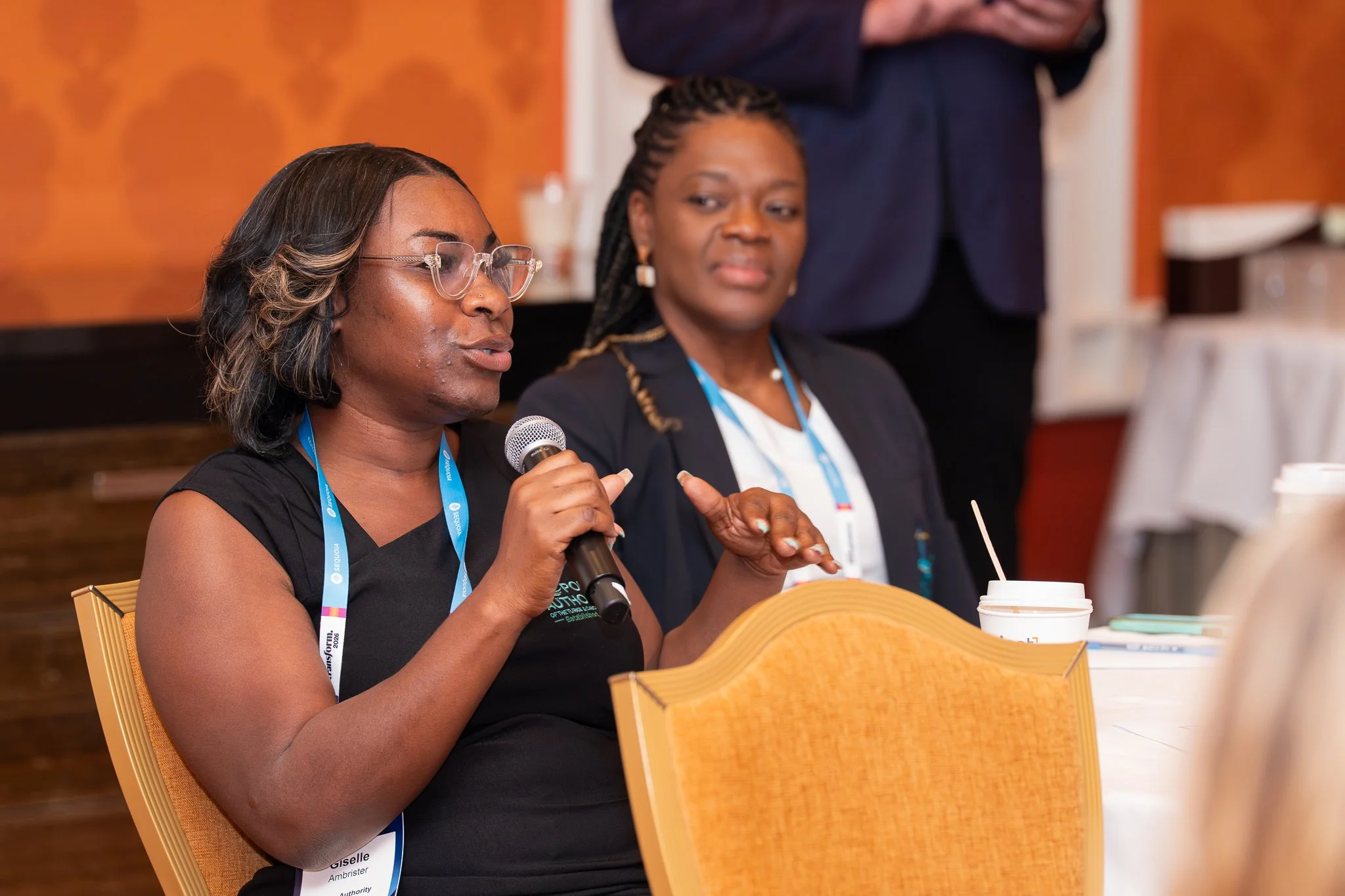
Photos from the EX Factor Summit
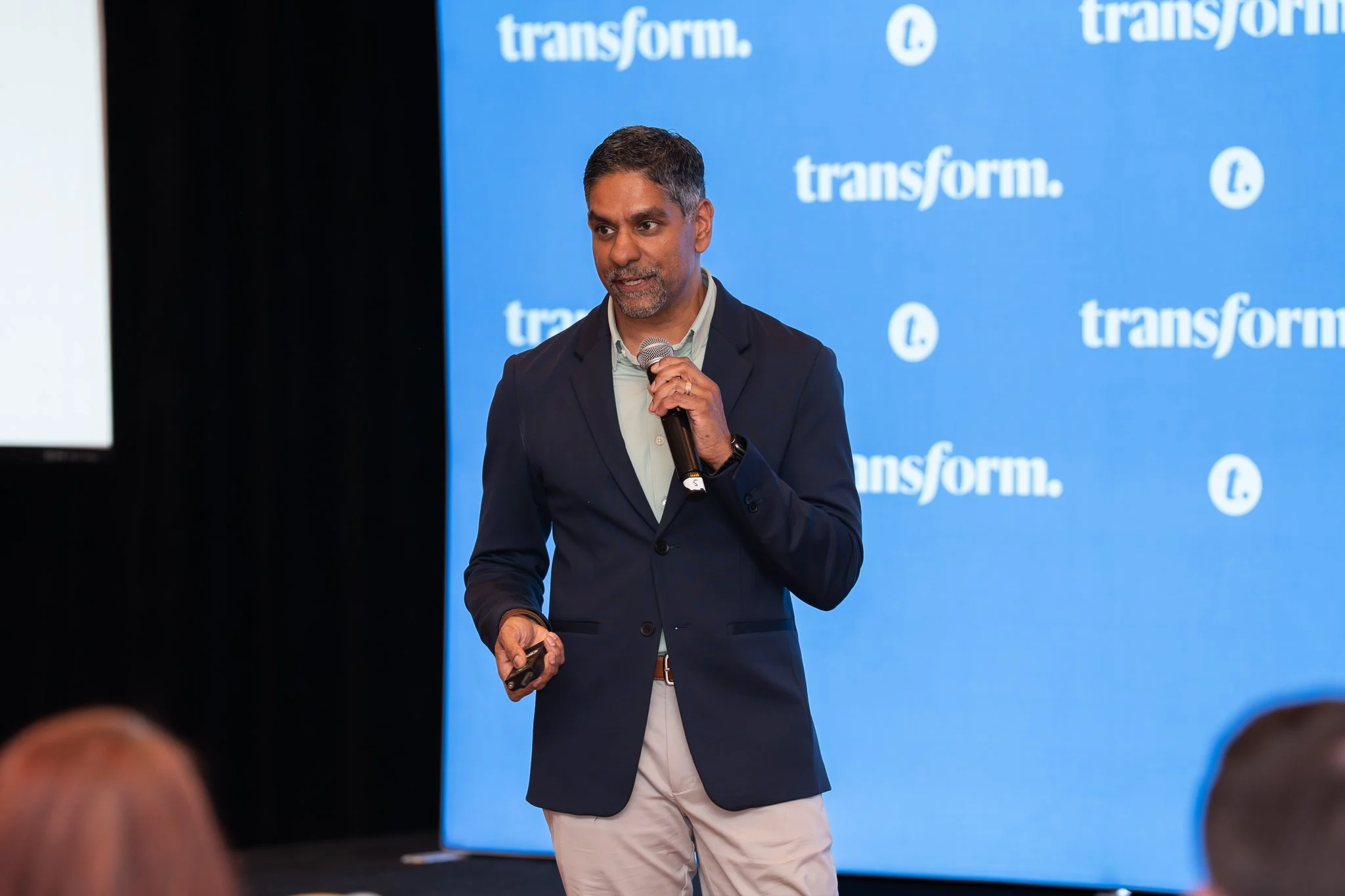

Written by Chuck Gose, founder of ICology.