

Small team, big screen: Scaling executive video without scaling the team
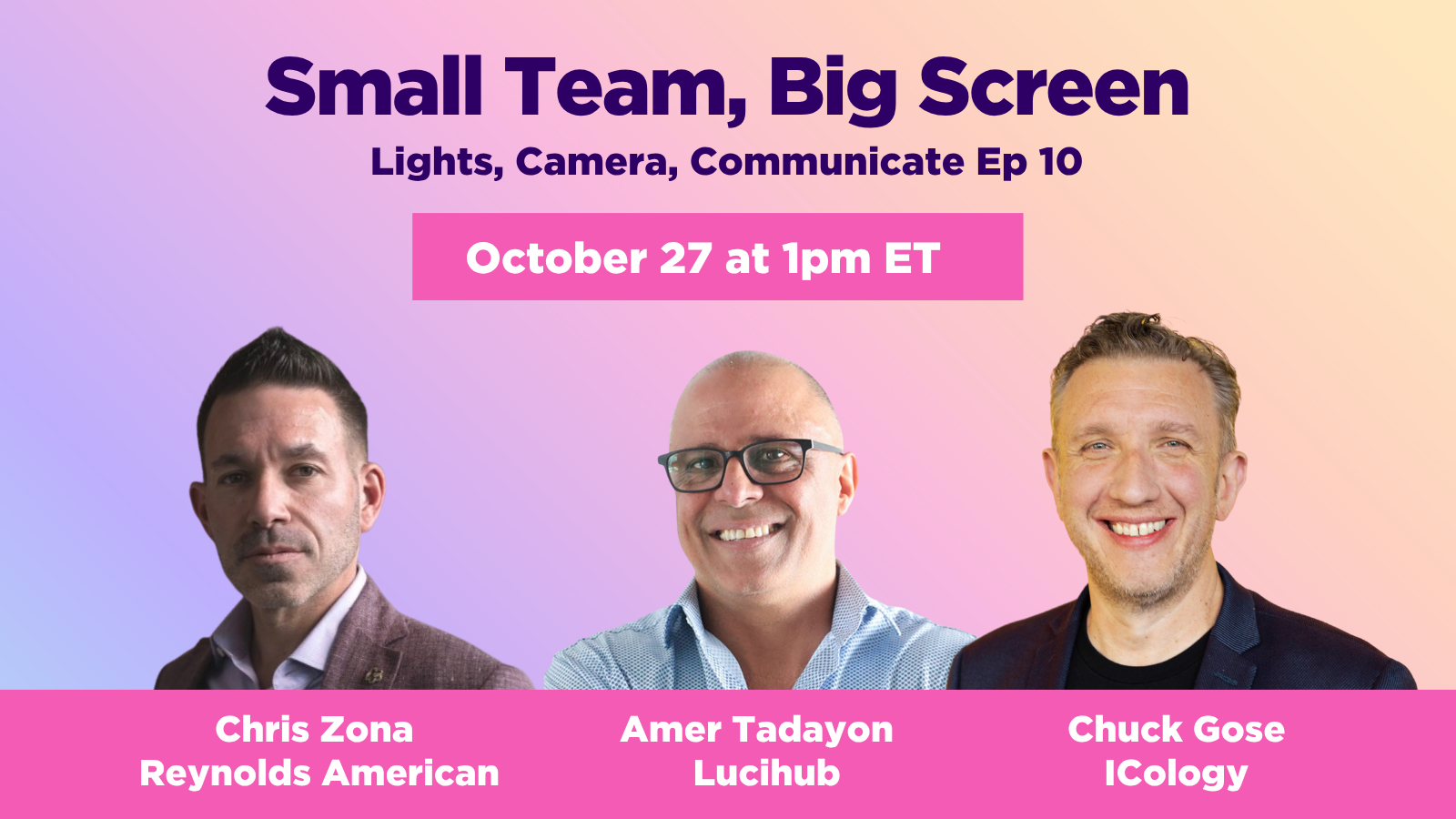
Chris Zona leads business and internal communications at Reynolds American. His team keeps 4,300+ employees connected to strategy and leadership. They've done it through multiple CEO transitions, in an industry where legal reviews almost everything, and without a big production department.
They still scaled executive video.
On Tuesday, October 27 at 1 p.m. ET, Chris joins Amer Tadayon and me for Episode 10 of Lights, Camera, Communicate to walk through how.
Why this one, why now
Most internal comms teams got asked for more executive video this year. Very few got more people to make it. In Simpplr's 2026 State of Internal Communications report, 64% of internal comms professionals said their team's headcount didn't change over the past year, and hiring optimism dropped from 38% to 27%.
So the help isn't coming in the form of headcount. It has to come from how the work gets done.
Chris and Amer presented a version of this story at Ragan's Internal Communications Conference this week. This episode is the longer conversation, with room for the parts a conference time slot can't hold.
What we'll cover
What broke. What executive video looked like when Chris joined Reynolds in 2021, and the moment the old way stopped working.
The new workflow. Who films, who edits, where AI does the work, and where a person still has to make the call. Plus how it gets through approvals in a heavily regulated company.
Starting small. The first pilot, what proved it worked, and how Chris got executives used to polished production to try something different.
The footage you already have. Most teams are sitting on hours of video nobody can find. We'll talk about finding it and putting it back to work.
One thing to think about before you join
If you're worried that less polished video means less credible leaders, the research leans the other way. In a 2015 study published in Psychological Science, Juliana Schroeder and Nicholas Epley found that people who heard a pitch rated the speaker as more intelligent than people who read the identical words. Watching the video versus only hearing the audio made no difference.
Employees want to hear the leader. The lighting matters less than you think.
Who it's for
Internal comms practitioners who own executive communications, or who keep getting handed the video requests. Especially if your team is small and you're tired of waiting for that to change.
It's free.