

The entrepreneurial playbook for communicators
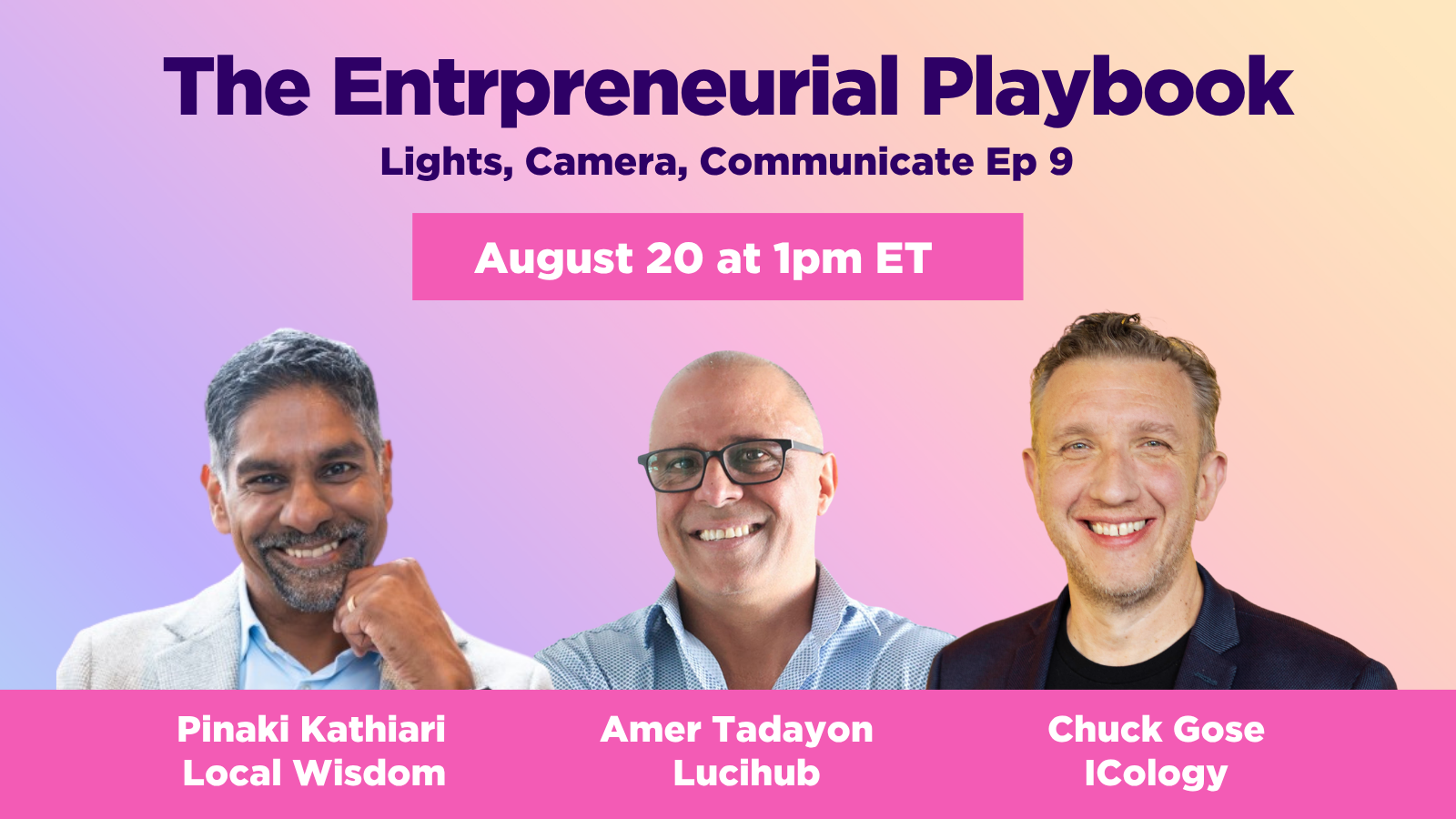
Amer Tadayon, Pinaki Kathiari and I have spent years in the same room as internal comms, just standing in different corners of it.
I came at it from the practitioner seat. Amer came at it as the guy trying to hand practitioners a better tool. Pinaki came at it as the agency partner who gets called when the work has to be good and it has to be done by Friday. All three of us ended up running companies.
That's the thread running through our next Lights, Camera, Communicate on August 20, and it's the reason the conversation is worth ninety minutes of your day.
Already sold? Save your seat here.
The rest of you, stick with me.
The theme is bringing an entrepreneurial spirit to comms. Not as a motivational idea. As a working method, and what it does for your productivity, your standing as a leader, and whether your work moves anything.
Amer built the thing comms teams reach for
Amer is the founder and CEO of Lucihub, an AI-powered video platform. Before that, he held leadership roles at companies like IBM and Frog. So he didn't stumble into building a business. He chose it, more than once.
The spark for Lucihub came from a complaint. An agency executive told him they were spending thousands on video production, and by the time the finished cut came back, the moment had passed and the video was irrelevant. Amer took that and turned it into a question: how do you make quality video at speed and scale?
Lucihub started in the wedding industry, of all places, then moved into corporate communications once he saw the same problem everywhere. Comms teams with real stories to tell, tight budgets, shorter deadlines, and a production process that couldn't keep up.
Ask him about the road and he won't sell you the highlight reel. He talks about failure, pivots, and starting over. That's the part I want him to bring to August 20, because that's the part comms rarely hears.
Pinaki inherited a company and rebuilt it
Pinaki is CEO and owner of Local Wisdom, a digital agency that's been doing communication work for two decades. He didn't found it. He joined as a product and account manager, moved through UX, then marketing, and took the CEO seat in 2017.
That's a different kind of entrepreneurship, and it's the one most communicators will recognize. He didn't get a blank page. He got an existing business with existing clients and existing habits, and had to change it from the inside without breaking what worked.
He also cofounded Resource Hero, a Salesforce app that helps teams see who's overloaded and who isn't. It came out of running an agency and getting tired of guessing.
If you've seen Pinaki at a conference, you've probably seen him running a creative problem-solving session. That's the instinct I want him to unpack on the 20th, because most comms teams treat problem-solving as something that happens to them rather than something they run on purpose.
I built a business from inside the comms world
My path looks different from the outside,
I started in manufacturing, at places like GM and Rolls-Royce, learning that the people closest to the work usually know the most and get told the least. That never left me. It became the whole premise of what I do now.
ICology began as a podcast and turned into something bigger over time: a community, a blog, a set of tools, live events. None of that arrived on a plan handed down from above. It got built the way most useful things get built, by trying something, watching it land or flop, and adjusting.
Which brings me to Lights, Camera, Communicate. Amer and I didn't wait for anyone to green-light a show. We saw a gap between how comms teams think about video and how video actually gets made, and we just started making the series. We didn't know if it was going to work but you don't know until you try.
That decision, to make the thing instead of asking permission to make it, is the smallest version of the exact instinct we're going to talk about.
Why an entrepreneur's habits fit comms so well
Here's what gets missed. Communicators already work like entrepreneurs. They just don't name it.
You spot the problem before it lands in a ticket. You make your case with no budget and a deadline that already passed. You put a message out, watch how it goes, and fix it in the next round. Founders call that testing a hypothesis. Comms calls it Tuesday.
On August 20, the three of us get specific about turning those instincts into a method. How to pitch your own ideas instead of waiting for a brief. Which risks are worth taking and which ones just make noise. How to test something small before you commit to it across the company. What busywork to cut so the work that matters gets room to breathe.
And underneath all of it, the leadership question. An entrepreneur earns a seat by owning outcomes, not by asking to be included. Comms can do the same, and the people who do stop being order-takers.
The details
Three people who've built and run companies, coming at it from three different directions, talking about what that experience teaches you about doing comms like the business is riding on it.
Date: August 20
Time: 1:00PM ET
Save your seat here: https://icolo.gy/lccep9
Bring your questions. None of us prefer a lecture to a conversation, and the best of these sessions turn into one.